
How Contractors Future-Proof Home Wiring During New Construction

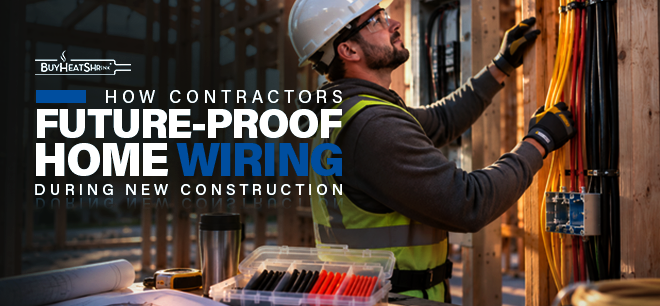
A house gets built once. Then it gets modified for decades.
From smart home technology and EV charging stations to home additions and changing electrical needs, few homeowners can predict exactly what their home will require ten or twenty years down the road. But it's going to be something.
Future-proofing home wiring isn't about predicting those changes. It's about preparing for them.
Why New Construction Is the Best Time to Future-Proof Home Wiring
Homeowners don't upgrade from scratch. They upgrade what they already have.
They build on wiring that was installed years earlier. Whether it's new appliances, extra circuits, updated wall switches, or expanded living space. Most homeowner "add-ons" and expansions have one thing in common. They require access to wiring that was installed during the original construction process.
But licensed contractors and professional electricians understand. Future changes aren't the problem. Unexpected labor, troubleshooting, and time-consuming electrical rework are. The more prepared your home wiring is now, the easier and cheaper any future projects become.
That's why many contractors use rough-in to do more than just install residential wiring. They also look for ways to make future service calls, repairs, and upgrades easier before the job is complete.
New construction creates opportunities that simply don't exist later:
- Walls are open.
- Cable pathways are accessible.
- Underground runs are being completed.
- Low-voltage infrastructure is being planned and installed.
- Organizing and labeling are easiest at this phase.
- Adding protection now costs significantly less than retrofitting later.
Once construction is complete, many of these opportunities disappear. That's why smart contractors think ahead during rough-in, not after the walls go up.
Build Stronger Wire-to-Wire Connections
Let's start with one of the most common causes of residential wiring issues and electrical rework. Weak wire connections.
Every wire-to-wire connection made during new construction is part of the home's electrical system for the long term. Loose connections, poorly crimped ones, and poorly protected points can cause issues later. If connections aren't built to last, problems may arise years after construction ends.
By then, most home wiring sits behind drywall. The rest is tucked out of sight, and away from hazards, in ceilings, attics, and basements.
When homeowners add new technology, expand existing systems, or make electrical upgrades, those original connections are often still doing the work. The connections contractors make today are expected to keep performing long after the project is finished.
Contractor Future-Proofing Tip: Connect for the Long Term
Contractors focused on future-proofing take the time to create secure, properly protected connections during installation and rough-in.
The best residential wire connections are the ones homeowners never have to think about. They stay secure. They don't wiggle or move. They don't cause intermittent electrical failures. They're built strong. So they can support future upgrades without causing problems elsewhere in the system.
Connection quality depends on more than workmanship alone. The products used to create and protect those connections matter, too. Look for butt splice connectors and electrical terminals with adhesive lined interiors. These seal tight and cure into place so they won't budge over the years. And don't forget to protect what you connect. (See step 4.)
Products for Stronger Wire-to-Wire Connections:
- Heat Shrink Butt Connectors – Wire-to-wire splicing with added insulation and long-term protection. Dual walls in 26-8 AWG. Secure, permanent residential wiring.
- Heat Shrink Step-Down Butt Connectors – Different wire sizes? No problem. Built for strong, sealed transitions between mismatched gauges. Stays put and stays dry.
- 3-Way and 4-Way Heat Shrink Terminals – A quick contractor solution for connecting multiple wires at a single point. Fast installation. Secure hold. Built for long-term electrical connections.
- Don't Forget the Second Layer – Heat shrink tubing adds protection around completed wire-to-wire connections. Reinforces the work you've already done. Simple contractor upgrade. Big homeowner difference.
Of course, not every future wiring problem starts at a connection point.
Protect Buried Wiring and Conduit
Some of the most expensive residential wiring problems start underground.
But during rough-in, new construction offers contractors access to open ground and floors, not just open walls. It's one of the only opportunities contractors have to install extra protection, lay extra conduit pathways, and prepare for future electrical expansion options.
Buried wiring and conduit face extreme pressure. There's moisture, shifting soil, landscaping work, and accidental dig-ins. Once dirt or cement covers the work, future upgrades become much more complicated and much more expensive. Trenches get filled. Concrete gets poured. Landscaping gets installed. What's easy to access during rough-in never stays that way.
Homeowners rarely leave outdoor spaces alone forever. New lighting, detached garages, security systems, backyard projects, and additional power needs show up years after the original installation. That's why many contractors think beyond a home's immediate requirements when planning underground wiring routes and conduit runs.
Contractor Future-Proofing Tip: Plan Underground Pathways Early
Contractors focused on future-proofing take advantage of open trenches and exposed conduit runs during the construction phase.
Contractors don't need to know exactly what a homeowner will add in the future. They simply need to make future access easier while the work is still exposed. A spare conduit run beneath a garage, driveway, or unpoured patio can make future electrical projects much easier. New wiring can be pulled through later without cutting concrete, digging trenches, or disrupting finished spaces.
Small decisions during new construction can give homeowners more options when their electrical needs change years down the road. Look for heavy-duty products designed to strengthen, seal, and protect underground wiring before the work disappears beneath soil, concrete, and landscaping.
Products to Protect Buried Wiring & Conduit:
- 3:1 Heavy Wall Adhesive Lined Heat Shrink Tubing – Direct burial rated for underground wire. Triple wall construction. The strongest, most rugged wire protection you can buy. Seals out water. Stands up to life underground.
- Heat Shrink End Caps – Cap conduits you don't need access to anymore. Easy install. Permanent environmental seal. Keeps pathways protected long after construction ends.
Then again, sometimes the biggest challenge isn't protecting wiring. It's finding it.
Label & Organize Behind-the-Wall Wiring
Every electrician or contractor has been there. You open a panel, ceiling, crawlspace, or junction box, and immediately cringe. What the heck was the person who installed this thinking?!
If you can't find it, you can't service it. Expand it. Tie into it. Or install anything else alongside it. Because you can't tell one wire from the next. If every wire looks the same –a cluster of black insulation– finding the right one becomes a guessing game. (This is a long, expensive, and headache-inducing problem for homeowners and future contractors.)
During rough-in, every wire has a purpose and every pathway makes sense. Years later, that knowledge disappears unless somebody takes the time to label and organize it. Now, while the walls are open and everything is visible and easy to get to. The walls stay the same. The installer won't.
Contractor Future-Proofing Tip: Label As You Build
Contractors focused on future-proofing know to do the next person a favor. They label everything as they build. Because they understand today's homeowner electrical installation becomes somebody else's job tomorrow…or years down the road.
Homeowners aren't usually the ones tracing circuits through walls and ceilings. Future electricians are. The installer's knowledge walks off the jobsite. Homeowner wiring stays behind. Good labels, organized wire bundles, and consistent routing help future electricians understand what they're looking at, fast. That means quicker troubleshooting, easier upgrades, and lower labor costs when homeowner electrical work needs to be done.
Look for products and tools that make behind-the-wall wiring easier to identify, organize, and follow long after the new construction phase.
Products and Tools to Improve Wiring Behind-The-Wall:
- Custom Printed Heat Shrink – Let us do the labeling for you. Custom text, numbers, symbols, logos, and color coding printed directly onto heat shrink tubing. Fast turnaround. No smudging. No fading. Built for long-term wire identification.
- Heat Shrink Printers & Label Makers – Prefer to handle wire identification in-house? Print custom labels and heat shrink markers on demand. Fast updates. Consistent identification. Complete visual control over every installation.
- Write-on & Flag Ties – The fastest way to label wire runs during rough-in. Write circuit names, locations, or system information directly on the built-in label. No printer required.
- Cable Ties – Bundle related wire runs together before the walls close up. Cleaner routing. Faster identification. Less time spent tracing circuits.
- Braided Cable Sleeving – Turn multiple wires into a single protected cable run. Added abrasion protection. USA-made. Cleaner, safer wire bundles. Easier upgrades later.
- Cable Tie Screw Mounts – Secure cable ties directly to studs, joists, and other framing members during rough-in to keep wire runs where they belong. Prevent sagging. Route wire runs with purpose. For contractors who take pride in a clean installation.
- Cable Tie Installation Tool – Installing hundreds of cable ties? Speed things up with consistent tension and clean cuts every time. Faster installs. Less hand fatigue. More uniform results.
The goal is simple: make sure future contractors can tell what goes where.
More Ways BuyHeatShrink Supports Contractors & Electrical Work
At BuyHeatShrink.com, we understand the fast pace and heavy-duty demands contractors deal with every day on the jobsite. Whether you're building from rough-in and new construction, or are already elbow-deep in a complicated service call, we've got what you need to keep your jobs supplied and your wiring projects on schedule.
- Need materials fast? Same-day order processing and fast shipping keep projects moving.
- Looking for products for a specific application? Shop by industry or explore our Learning Center to quickly find products, guides, and solutions for your next project.
- Buying for crews or recurring jobs? Bulk purchasing options make it easier to keep premium electrical products in stock and on hand across multiple job sites.
- Not sure which product is right? Eliminate the guesswork. Request free samples with free shipping before investing in a larger purchase.
- Need help finding a solution? Our customer service team works directly with contractors to help match products to the job.
Built for contractors, not just projects.
BHS: Making Future Wiring Easier On Everyone
A house gets built once. Then it gets modified for decades.
Contractors can't predict every electrical upgrade a home will need. But they can make life easier for the people who come after them. Strong connections, protected wiring, and clear identification can help homeowners avoid unnecessary costs. And it helps the next electrician or contractor spend less time troubleshooting and more time moving the job forward.
The contractor who installs a home's wiring today may never see that house again. But the decisions made during rough-in affect every upgrade, repair, and service call that follows.
Nobody can predict future electrical needs. But preparing for them doesn't have to be complicated. Taking the time to build with long-term reliability in mind can make electrical systems easier to maintain, modify, and expand for years to come.
At BuyHeatShrink.com, we carry a deep inventory of premium products and contractor-focused solutions that support residential wiring long after construction is complete.
Build today for tomorrow's service call.
Give homeowners wiring that's ready for whatever comes next.
Find the products to do it at BuyHeatShrink.com.


About the Author


Types of Heat Shrink: What They Are, and What They’re For
September 9, 2020
How To Remove A Cable Tie
August 10, 2020

10 Types of Electrical Connections and How They’re Made
March 10, 2021

The Top 10 Do's and Don'ts of Heat Shrink
November 10, 2023

How to Use Heat Shrink Wire Connectors
November 5, 2023
How Contractors Future-Proof Home Wiring During New Construction
November 12, 2026
The Practical Homeowner’s Guide To Safe, Easy Storm Prep
October 28, 2026

The Best Off-Road Vehicle Upgrades for Reliable Trail Performance
October 15, 2026

The Complete Hunter’s Guide to Better Outdoor Gear
September 30, 2026