What
is Braided sleeving?
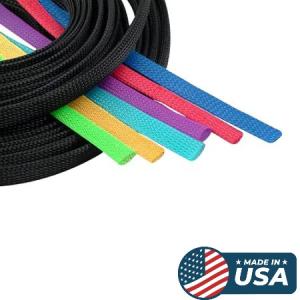
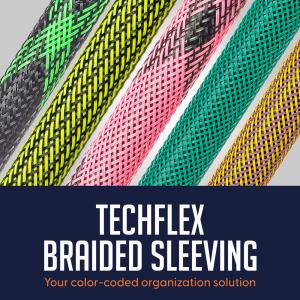
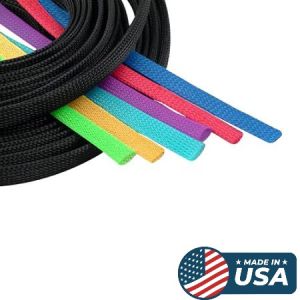
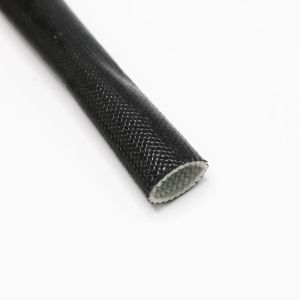
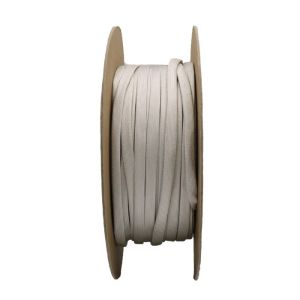
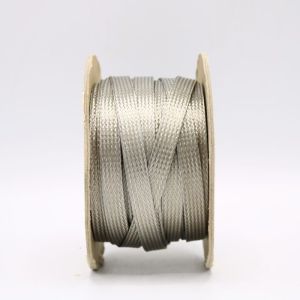
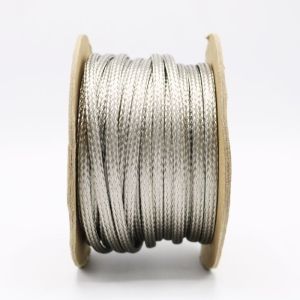
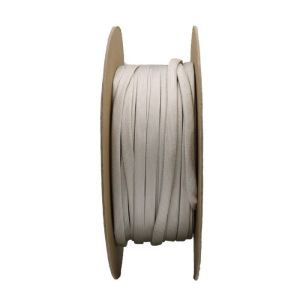
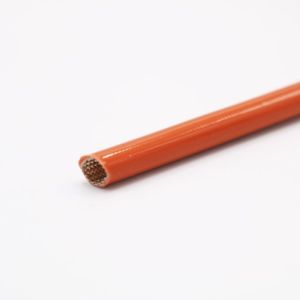
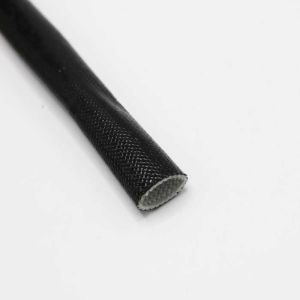
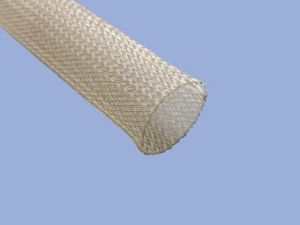
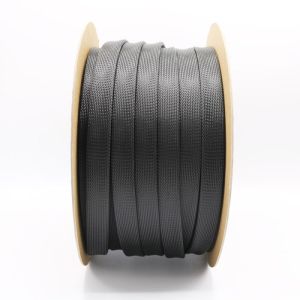
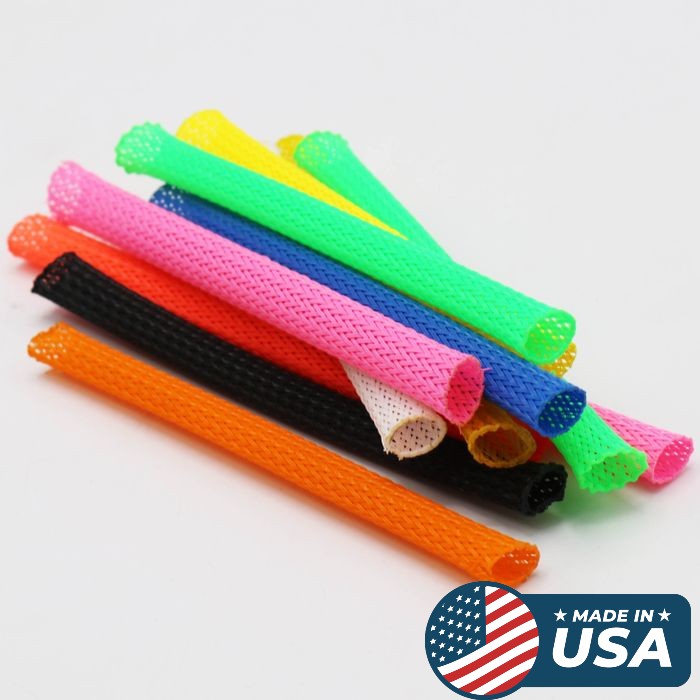
Braided sleeving is a 200 million dollar business.
Braided sleeves are used in many places in our everyday lives:
Cars, electronics, electrical appliances, motors, wire management,
toys. Called by many names including Nylon braided sleeving,
sheathing, wire mesh, Expando, skuff jacket, snakeskin. Expandable
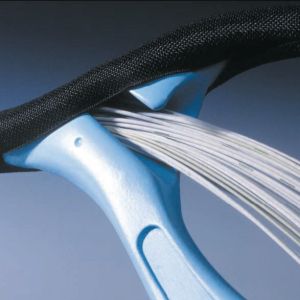
braided sleeving resembles "Chinese Finger Cuffs".
When you push the end back it expands to go over wires easily,
and then when you let go, the sleeving comes back to its original
diameter (or the diameter of your wire harness or bundle, whichever
is larger).
How
is Braided sleeving manufactured?

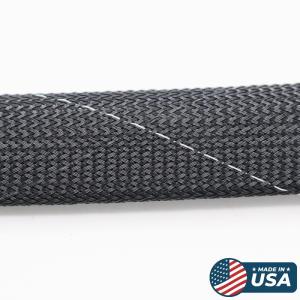
The braiding process in itself is actually very
simple. It gets tricky when one needs to control the properties
of the final braid. Spindles of yarn (or monofilaments) are
placed on what's called a carrier. The carrier rotates on a
circular braiding machine in a "zig-zag" fashion,
while the yarn is pulled off the spindle. On a braiding
machine, half the carriers move in the clockwise direction,
while the other half move in the counter-clockwise direction.
This, combined with the alternating movement of the carriers
causes a braided sleeve to come out of the machine.
Braiding machines range in size from 8 to 144
carriers. Generally*, the size of the braided sleeve is determined
by the braider (i.e. the number of carriers) it is made on.
Expandability of the braid is controlled by two factors: type
of yarn used, and braid angle. The type of yarn directly controls
the expandability: A monofilament
PET (a single strand) will result in a much more expandable
braid than a multifilament
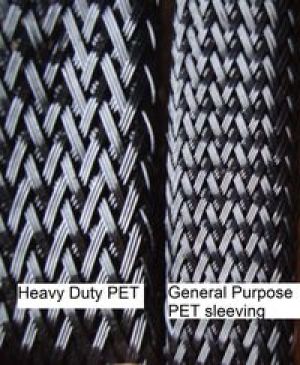
Nylon will. Also, the braid angle is equally important. A tighter
braid angle will result is a much less expandable braided sleeve.
Such a braid is called a "tightweave". A looser braid
angle may result in the same nominal diameter as a standard
braid, but the expandability will be much higher.
Another factor that controls the properties of
the braid is the number of ends per carrier. For example: a
96 carrier braid with 1 end per carrier will be much more see
through than a 96 carrier braid with 3 end per carrier. The
96-3 will also be more abrasion resistant.
What
types of braided sleeving are available?
At BuyHeatShrink.com, we can handle all of your
sleeving needs. Our people have many years experience in braiding,
wire harness design and manufacture, monofilament design and
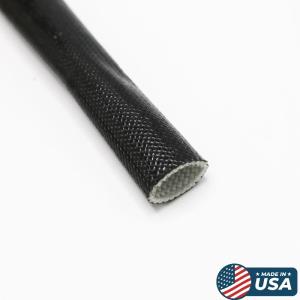
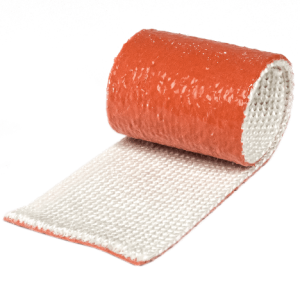
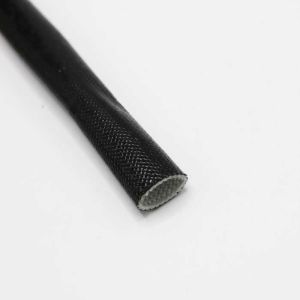
manufacture, etc. Whether you need Electrical Insulation (coated
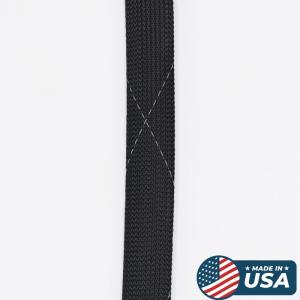
braided fiberglass), Abrasion Resistance (Polyester
PET, Flame
Retardant PET, Nylon
braided sleeving, Nomex®, Kevlar®, Halar®
and cotton), Thermal Protection (metallized products, T-Glass
sleevings, Ceramic, Quartz and Silica braided sleevings ), EMI/RFI
shielding (tin coated copper, silver coated copper braid - QQB575),
or extreme Chemical Resistance (Ryton PPS, Teflon PFA, Halar
E-CTFE), we can supply it all to you. Does your assembly
require the use of only Plenum
rated materials? Our Halar braided sleeving is the perfect
solution.
Capitalizing on our relationships with the largest
manufacturers in the world, we can even braid your custom yarns.
Do you have a yarn that you want braided? Do you have a specific
resin that you want coated or impregnated onto E Glass? Do you
need Nomex braided over a special wire? We can do it all for
you. Are animals chewing on outside electrical or network lines?
We
can help.
Our braids meet the toughest industry standards.
Our products are UL listed, CSA listed, and our flame retardant
products meet the UL VW-1
and UL 94V0 standards. also, where noted, our products are Mil
spec compliant (e.g. AMS-DTL
23053 formerly MIL-I-23053).
We have recently rotated our stock, carrying only RoHS (Restriction
on Hazardous Substances) compliant materials. This standard
bans the use of various materials in manufactured products.
Such products include: lead, cadmium, mercury, hexavalent chromium,
polybrominated biphenyls, polybrominated diphenyl esters, CFCs,
PCBs and PCTs.
* the information posted on this website is meant
to give the reader a general understanding of the braiding process,
and how the properties of braided sleeving can be influenced.
This is by no means a "tell-all" tutorial. If you
would like specific information on custom braided sleeves, please
feel free to contact
us
Top