
Why Spring Moisture Messes With Your Wires

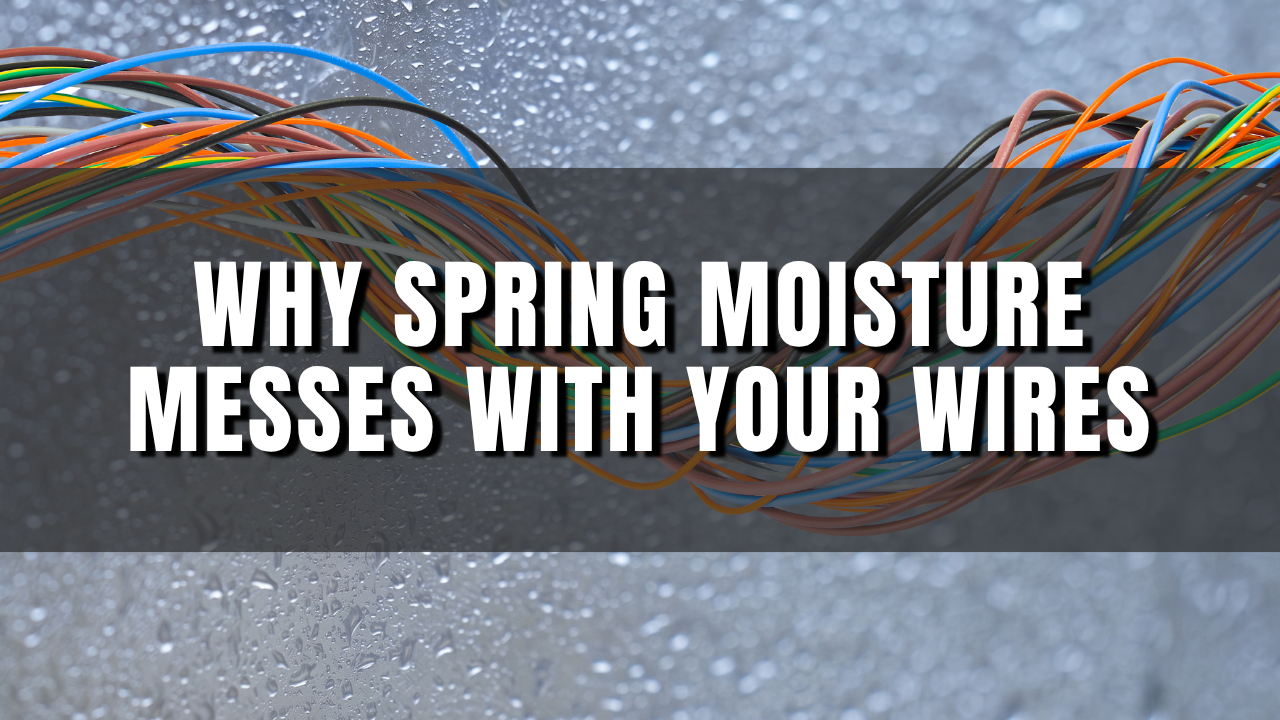
Spring moisture messes with all of us.
It's damp and dreary every other day. The rain may perk up your lawn and those daffodils, but it's not doing your wiring any favors–inside, outside, enclosed, or not. This spring, the moisture will get in.
It's only a matter of time before spring moisture starts messing with your wires…unless, of course, you've got an adhesive lining.
Why Spring Is the Worst Season For Wires
Spring has a way of waking up every damp corner of your house.
Warm weather hits. Humidity spikes. Garages sweat. Basements get muggy. If your wiring ever feels a little temperamental around March or April, you're not imagining it. Spring moisture is a huge problem for homeowners.
Spring moisture settles into places you'd never think to check–stored cords, old splices, boxes that stayed cold all winter, attics, and crawl spaces. But when the temperature swings 30 degrees in a day, the forecast calls for rain, and the calendar says it's not summer yet, moisture is unavoidable. It's coming, and we have to stop it before it reaches our wires.
Here's how spring moisture likes to hide:
Freeze/Thaw Cycles
Spring temperature swings make cold metal sweat. Wiring in garages, sheds, and unheated basements gets hit first — moisture forms on the surface, then works its way into older jackets and splices that stayed cold all winter.
Condensation on Cold Surfaces
When warm, humid air rolls into a space that's still chilly, everything from breaker boxes to extension cords can collect moisture. Attics, crawl spaces, and unfinished rooms are the biggest culprits because they warm unevenly.
Snowmelt and Rain Working Together
Meltwater and early-season rain push dampness into places homeowners assume are "dry enough." Storage corners, utility rooms, and low-lying basement areas stay damp just long enough for wiring to soften, corrode, or start acting temperamental.
Partially Enclosed Spaces
Patios, porches, carports, bonus rooms, and over-garage spaces have uneven access to warm spring air. These in-between areas trap moisture around wiring that stayed cold all winter, creating pockets of damp air that settle right on cords and connections and set the stage for early-season failures.
Rain, mist, fog, condensation everywhere. Spring is a deluge. Spring moisture doesn't just make everything damp. It changes how wiring behaves. Once moisture is present in the air, in the room, or on the jacket itself, everything falls apart, literally. Moisture drives corrosion, adds resistance, traps heat, and makes weak points fail faster.
Water is dangerous for wires, but spring is all about it. That's why springtime is the best time to pay attention to the little red flags your wiring throws at you before something bigger goes wrong.
Early Signs of Moisture-Damaged Wires
Early signs of wiring problems are often visible as small changes on the wire's surface. You just have to know where to look and what you're looking for.
Once moisture gets close to a wire, it leaves a trail. You'll see it in the color, the texture, the feel of the insulation. You'll notice it when you get up close to your wires and jackets. You'll find it when you inspect places that should be bone-dry, but aren't anymore.
These changes are small, but they're the first things homeowners need to look for because they tell the real story of what's happening inside your wiring. These warning signs are the first indication that water has been near your wires — and if you're seeing them, only an adhesive lining can stop the damage from getting worse.
Here are the early signs of moisture-damaged wires that pros look for first:
1. Corrosion Bloom
This is your first water warning sign. Corrosion bloom happens when moisture hits bare copper, and early oxidation starts to break down the metal. As the surface degrades, resistance rises–and so does the risk of shock, shorts, or sparks.
How To Spot It: Look for powdery green, white, or bluish crust. Check exposed copper ends, pulled-back insulation, and connection points for discolored dust or a fuzzy halo on the metal.
2. Soft Insulation
Soft insulation is a sign that moisture has started to seep into the jacket. When water gets into the outer layer, the insulation loses its firmness and begins to break down, which means the wire underneath is no longer fully protected.
How To Spot It: Gently press along the wire's outer jacket. If any section feels squishy, pliable, or "mushy" instead of firm, moisture is inside the insulation. You'll notice it most on cords that sit on damp surfaces or in areas with poor drainage.
3. Damp Splices
A damp splice means moisture has worked its way inside a connection. When water enters a joint, it sits directly against the metal and insulation, increasing the risk of corrosion, shorts, and sudden failure.
How To Spot It: Check wire-nut splices, temporarily taped joints, and any DIY repairs. Look for darkened tape, wet connectors, or tiny moisture beads around the splice — especially in garages, basements, or outdoor boxes.
4. Water Inside Cords
Water inside a cord means moisture has gotten past the jacket and is now traveling along the conductors. Spring moisture on bare conductors is a guaranteed electrical hazard, and a well-hidden one at that. But we'll help you find it.
How To Spot It: For standard insulation, check for soft spots, swelling, or sections that feel heavier than the rest of the cord — moisture inside adds weight and changes the feel. Cords that sit on wet ground or stay outside after rain are the first to show these signs.
5. Condensation Inside Boxes
Condensation inside an electrical box means moisture is getting into the enclosure and settling on the metal parts. Spring humidity and temperature swings make this one easy to miss — the box looks fine from the outside, but the hardware inside is already getting wet.
How To Spot It: Open the cover and look for foggy lenses, tiny droplets on the metal, or damp screws. You'll see it most in exterior boxes, basement junction boxes, and any enclosure sitting against a cold wall or uninsulated surface.
Professionals know how sneaky water is. They understand how relentless it is. And they know what to look for first, but now, so do you.
If you're dealing with unexpected standing water or at any point you feel in over your head, it's ok to call in a professional. That's what they're there for. Never work on your electrical system without turning off the power at the breaker. Unplug any cords before working on them. And always prioritize your safety.
Moisture leaves clues, and the first ones usually show up right on the surface of the wire (or its insulation). Lucky for all of us DIYers at home, there's one really easy fix to all spring moisture – adhesive lining.
Why You Need An Adhesive Lining This Spring
The only thing that stops spring moisture is an adhesive lining.
You can find adhesive linings in any product labeled as "dual wall". Dual wall = two walls. That adhesive lining is your second wall. The waterproofing layer. The start dry, stay dry internal wall of adhesive lining that never lets you down and never lets water in.
Adhesive linings make products waterproof, like our heat shrink tubing and butt splice connectors. They're heat activated and melt down, flowing over wires, jackets, connections, and conductors smoothly and quickly. They coat every surface, fill every gap, plug every hole, and bond to just about any substrate. Adhesive linings cool to cure in minutes, hardening into 360 degrees of firm, flexible, and most importantly….waterproof protection.
If you're trying to stop spring moisture and water damage, you need an adhesive lining.
How To Stop Spring Moisture With Adhesive Lining
Remember, an adhesive lining is a waterproof seal, not a repair.
Adhesive linings are water stoppers, but you can't just slap a piece of adhesive lined tubing over pre-existing water damage. Adhesive lined products can't resurrect any insulation that's already compromised.
Once you've spotted spring moisture, here's the simple path to shutting it down:
If it's damaged → replace it.
- Remove any sections where the insulation or connection is already damaged. We've got "how to remove" guides ready and waiting for you to explore. Think shallow scores and light pressure.
- Once the damaged sections are replaced and the insulation is clear and dry, you'll have waterproof seals, and spring moisture has nowhere left to go.
If it's intact → you can seal it.
- For everything that's still sound (and dry), seal it with an adhesive lining so moisture can't get (back) in.
If it's intact but wet → let it dry, then seal it.
- Wires should never be wet. This is a huge safety red flag. Proceed carefully and monitor your environment and the location where your wires live. Outdoor, semi-outdoor, and partial enclosures ALWAYS require an adhesive lining to stay dry.
- Only apply adhesive lining to clean, dry surfaces.
That's it. That's all it takes to shut down spring moisture. Adhesive linings make it that easy.
You spot the damage, remove the section, and replace it with a seal that's solid, airtight, weather-ready, and 100% waterproof. Get an adhesive lining involved, and you'll keep your wires dry from here on out.
Seal Out Spring Moisture For Good
Spring moisture is a problem.
It shows up quietly. It sneaks into your wires, bloats your insulation, and causes everything from annoying power flickers to deadly electrical fires. Spring moisture doesn't mess around, but an adhesive lining puts it in its place, fast.
Moisture leaves clues, but it doesn't get the last word. You've seen the signs. You know the risks. And now you know how to build a barrier that spring can't break through. Replace what's damaged, seal what's sound, and give every connection the waterproof protection it should have had from the start.
Adhesive lining is how pros keep wiring dry–and now it's how you can, too.
At BuyHeatShrink.com, you'll find adhesive lined heat shrink tubing and connectors built for real-world moisture control. Dual wall, heat-activated, and ready to lock out water wherever your wiring lives.
Want dry wires? Get an adhesive lining.
It's the waterproof protection spring demands, and summer can't break.
Shop BuyHeatShrink.com today and seal out spring moisture for good.


About the Author


Types of Heat Shrink: What They Are, and What They’re For
September 9, 2020

How To Remove A Cable Tie
August 10, 2020

10 Types of Electrical Connections and How They’re Made
March 10, 2021

The Top 10 Do's and Don'ts of Heat Shrink
November 10, 2023

How to Use Heat Shrink Wire Connectors
November 5, 2023

The Complete Hunter’s Guide to Better Outdoor Gear
September 30, 2026
How to Measure Cable Diameter
September 29, 2026


Road-Worthy: How Sleeving Helps Long-Haul Trucking & 18-Wheelers Get It Done
September 10, 2026
How To Waterproof Home Swimming Pool Wiring
August 13, 2026