
Indoor Electrical Safety: How To Spot Danger Inside Your Home

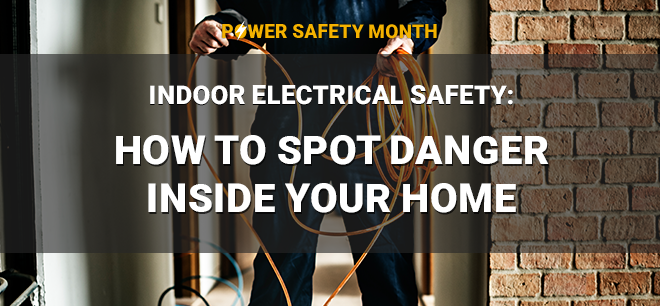
There's a lot going on inside your home.
Kids charging everything they own. Appliances running on autopilot. Devices plugged in wherever there's an open spot. Streaming, cooking, gaming, working. Just another Tuesday, right?
Your indoor electrical wiring carries all of that, all the time. And the truth is, the biggest electrical dangers are the ones hiding inside your very own home.
Why Indoor Electrical Danger Is Easy to Miss
Indoor electrical danger is easy to miss for one simple reason: almost everything happens out of sight.
That's not your fault — it's just how home wiring works. You only see the symptoms, not the electrical cause. It's why we all Google "flickering light meaning" and yell at our cords when they suddenly stop charging. It feels random and frustrating, and it's easy to blame the device, but it's often your home wiring trying to tell you something.
And unlike outdoor wiring, where you can literally see the sun, rain, or lawn mowers doing damage, indoor wiring problems don't come with an obvious visual culprit. Everything that matters is tucked away, so the "why is this happening?" part is never as simple as it looks.
Here's what's working against you inside your home:
- Everything is hidden behind walls and ceilings. Home electrical wiring, junctions, and connections sit out of sight, so unless you're actually looking AT them, they're easy to overlook.
- Indoor electrical systems run constantly. Outlets, circuits, and devices stay energized around the clock, which means wear builds slowly and quietly.
- Indoor wiring ages quietly. Older home wiring wasn't designed to take on modern loads; age + stress = almost time for a disaster.
- Indoor routines normalize small changes. A flicker here, a tug there, a warm outlet you don't notice— everyday life makes it easy to brush off early clues.
Put all of that together, and it's no surprise indoor electrical wiring issues slip past even the most attentive homeowners. The key is learning how to catch the small signs before they turn into bigger problems and improve your home wiring safety along the way.
How To Sleuth Out Hidden Dangers INSIDE Your Home
Even in a house full of noise, schedules, and plugged-in everything, your home will still leave you clues that something is wrong or is about to go terribly wrong.
- Outlets that feel looser than they used to
- Switches that don't click or respond the same way
- Devices that only behave normally in certain spots
- Power strips that stay crowded no matter how you rearrange
- Cords that need more "fussing" than they did last month
Sometimes even inside, you can see the direction the storm's coming from. Think high traffic areas, pet or kid play zones, home theatre setups, home offices, and anywhere devices tend to congregate.
Corners, edges, floors, and charging stations are prone to fast failures due to daily tugging and plugging. If you have "a pretty good idea," that's always a good place to start. Otherwise, you'll have to play a little detective.
Not sure where to start?
Let's walk through what to look for together – so you can sleuth out the hidden dangers in your own home, easy peasy. Spot 'em and stop 'em.
Heat Where It Shouldn't Be
The first thing you're looking for isn't visual at all. It's a touch cue. And if you've ever wondered "why is my outlet warm?", this is exactly why — heat is one of the best hidden electrical fire hazards inside your home.
Most electrical problems don't start with sparks; they start with heat. Heat buildup happens anywhere electricity meets friction or inefficiency. You don't see it. You don't hear it. You only feel it–if you happen to touch the right thing at the right moment. But hidden heat is how home wiring problems begin. Miss that early heat and you miss the moment before a home wiring failure becomes a home electrical fire.
Roughly 50,000 home electrical fires start each year in the U.S from electrical failure or malfunction. Faulty wiring causes 23% of all home electrical fires. And most homes have 2 feet of wiring per square foot of living space. So, a 1500 sq foot house hides roughly 3000 sq feet of wiring behind its walls. How much of yours have you thought about recently?
How To Spot It
- Hot plugs, outlets, or switches that are warmer than the wall
- Any warmth on a breaker panel door, cover, or the wall immediately around it
- A single warm spot along a cord
- Appliances that feel hotter than they normally do
- Plugs or cords that don't cool down between uses
How To Stop It: General Purpose Heat Shrink
General purpose heat shrink tubing is one of the simplest ways to reinforce and protect your home's electrical wiring and cords.
Polyolefin heat shrink adds insulation, reduces strain, and is heat-rated up to 275°F. Heat shrink is an easy, affordable way to strengthen cords, cables, and wires. It provides firm, flexible protection that any homeowner can install in seconds. But if the heat is coming from the outlet, breaker, or appliance –not the cord – that's when a professional should step in.
Heat shrink tubing gives your indoor home wiring the stability and support it needs to keep everything running safely and stop heat where it shouldn't be.
Noisy Cords and Devices
The next hidden indoor hazard to hunt down is noisy cords and devices. Buzzing outlets, cords that hum when you cross them, electronics that are louder than the volume, and chargers that vibrate or whine under load are all signs that electricity isn't flowing as cleanly as it should.
Noise is your early warning system here. Electrical current should move silently. When it doesn't, that sound is friction, signals overlapping, interference, or instability announcing itself before anything more serious happens. You don't need tools to catch it — just your ears and a moment of…as quiet as you can get everyone to be.
How To Spot It
- Start with a quiet house (Yeah, we know…)
- Turn on one device at a time
- Gently touch and jostle cords
- Listen for whining (You know that sound…)
- Think about the last device you powered or last cord you moved before the noise started…
- That's the wire or cluster of wires where shielding is needed
How To Stop It: Tin/Copper EMI/RFI Shielding Sleeves
Tin/Copper EMI/RFI Shielding Sleeves are built to block interference and quiet electrically noisy environments.
These expandable braided sleeves are made from tinned copper and designed to wrap snugly around your home wiring. The flexible, firm, and self-conforming mesh physically shields the wiring inside from electromagnetic and radio frequency interference. This helps reduce buzzing, whining, signal disruption, and instability — especially in high-density setups where multiple devices, chargers, or streaming systems are running close together.
If your cords are humming, your outlets are buzzing, or your devices aren't acting like themselves, shielding sleeves bring the quiet back.
Wiggly Wires and Loose Connections
Wiggly wires and loose connections are some of the sneakiest indoor electrical hazards. Loose connections happen when wires shift out of alignment, plugs wear down, or terminals stop gripping the way they used to.
A wiggly wire doesn't always stop working right away, which is part of the problem. It flickers. It cuts out. It turns on but not all the way. This makes wiggly connections easy to ignore until the connection heats up, arcs, or fails completely. And that can happen fast.
How To Spot It
- Plugs that won't stay fully seated
- Wires that shift when you bump or move them
- Outlets that feel loose or have visible gaps
- Devices that need "just the right angle" to work
- Power that cuts in and out
How To Stop It: Adhesive Lined Heat Shrink Butt Splice Connectors
Adhesive lined heat shrink butt splice connectors lock down wiggly, loose, or unreliable wire connections in seconds.
These little adhesive lined marvels have premium internal metal cores, surrounded by a dual-wall inner adhesive layer and a protective heat shrink outer wall. They restore failing or loose connections by gripping the wire firmly on both ends. They add reinforcement and a waterproof seal that holds up to everyday movement.
Adhesive lined heat shrink butt splice connectors lock down wiggly connections for the long haul, so your indoor home wiring stays safe and predictable.
Overworked Power Strips and Cord Clutter
Nobody sets out to overwork a power strip or build a nest of cord clutter. It just happens. (We totally get it.) But when everything ends up plugged into the same spot, strain builds fast. And the truth is, indoor electrical safety starts with clean routing and evenly distributed loads.
When too much lands in one outlet or power strip, it ends up carrying more load than it was built for. Heat builds in the plastic. Plugs loosen under the weight of tangled cords. Connections start pulling, shifting, and working at weird angles. That's where you see flickering lights, brief resets, or a charger that cuts out if the placement isn't "just so."
Overloaded outlets and overheated cords are the fastest ways to push a circuit past its comfort zone and into the fire-danger zone. But we're about to show you how to find it faster.
How To Spot It
- Check for "everything in one place" setups — too many high-draw devices sharing a single outlet or strip is the biggest red flag.
- Look for tangled or stretched cords — knots, tight bends, or cords pulling at odd angles all add stress to the connection.
- Feel for warmth — a power strip, plug, or outlet that's warmer than the room around it is carrying more load than it should.
- Watch for shifting plugs — anything that wiggles, tilts, or won't stay fully seated is under strain from crowded cords.
How To Stop It: Cable Ties, Mounting Bases, + Labeling
The fastest way to stop overloaded outlet dangers is to get every cord routed, secured, and separated so nothing piles up.
These simple organization tools were made for the exact strain that tangled, sagging, or overcrowded cords create. Cable ties bundle and shorten long runs so plugs aren't pulling at weird angles. Mounting bases lift cords off the floor and guide them along clean paths, keeping weight off the strip. And labeling helps you track what's plugged in where, so you can distribute the load of your high-draw devices instead of stacking them in one spot.
Together, these cable management solutions turn a chaotic cord pile into a safe, balanced setup.
Insulation That's Seen Better Days
The next indoor electrical danger hiding in your home is insulation that's worn down or damaged.
Cords get stepped on, pinched behind furniture, dragged across floors, chewed by pets, or exposed to heat and moisture over the years. Little by little, that protective jacket starts to crack, split, or thin out—and once it does, the wiring inside is no longer as shielded as it should be.
Damaged insulation and exposed metal conductors are huge indoor electrical hazards. They cause shorts, sparks, and pose electrocution shock risk. Water-logged jackets, brittle or cracked insulation, and dusty, dirty, and discolored insulation need to be replaced or repaired before they get worse.
How To Spot It:
- Turn off the power at the breaker.
- Examine home electrical wiring, cords, and cables for missing jackets, cracks, splits, or exposed metal.
- Cut out the damaged sections with sharp scissors or a utility blade.
- Use a light, shallow score and stop at clean, intact insulation.
- Replace the removed section of insulation with adhesive lined heat shrink to rebuild the protection and seal out future damage.
How To Stop It: Adhesive Lined Heat Shrink Tubing
Adhesive lined heat shrink tubing is the most convenient and universal method to rebuild worn-down insulation and protect exposed wiring indoors.
This dual-wall tubing was made for the exact kind of cracked, split, or thinned-out jackets you just found. The outer layer shrinks tight to rebuild the cord's protective barrier, while the inner adhesive melts to fill gaps and seal out moisture and dust. Once heated, it cools into a tough, protective sleeve that bonds to the cord and stops damage from spreading. Adhesive lined heat shrink tubing gives your indoor home wiring a fresh, durable jacket that's built to last.
Indoor Home Electrical Safety Tips For Homeowners
You've just covered a lot of ground — and if you're feeling more aware of your home's wiring than you were ten minutes ago, that's the point.
Now that you know how to track down the most common signs of electrical problems, let's make sure you're set up to handle them. A handful of smart tools and small habits can turn a stressful repair into a quick, safe, no-sweat fix – and help you prevent electrical fires long before they start.
- Turn off the power at the breaker. Yes, we have to start here. It's the quickest way to make sure whatever you're about to touch isn't live. This matters!
- Use a heat source you trust. A heat gun gives you even shrinkage, better adhesive flow, and fewer do-overs. (But in a pinch, a lighter or torch will do.)
- Check your sizes before you start — and if you're not sure, just ask us. Heat shrink and connectors work best when they fit the wire you're repairing. If you're unsure what size you need, we'll help you pick the right one or send a quick sample so you don't have to guess.
- Grab a cable tie installer for faster, one-handed adjusting and installation.
- Unplug small appliances when not in use.
- Swap in home safety devices where they matter most. Outlet covers, plastic caps, and GFCI outlets or breakers add a layer of protection in kitchens, bathrooms, basements, and anywhere kids or water are nearby.
- Keep a kit on hand, so you always have the right size. Our cable tie kits, zip tie kits, and butt splice connector kits give you extra pieces in every size, so you're never stuck mid-fix or forced to improvise with the wrong piece.
With the right basics on hand, staying ahead of hidden indoor electrical issues gets a whole lot easier. So you can fix damaged cords, repair frayed insulation, tighten loose electrical connections, and organize cords safely in your own home.
Safer Indoors Start Here
There's a lot going on inside your home.
You've got devices (and kids) charging pretty much around the clock. You're out the door, on the go, and you really don't have time to play detective with your home electrical.
But keeping your home electrical running safely isn't optional. It's a cross every homeowner has to be aware of…and preferably now, before something has time to get bigger or worse later.
We know life is busy, but May is National Electrical Safety Month – and indoors is the perfect place to start. Give your indoor cords, outlets, and everyday wiring a quick once-over now, and your whole home will feel steadier, safer, and a lot less annoying all year long.
Visit BuyHeatShrink.com today and protect what matters most.


About the Author

Types of Heat Shrink: What They Are, and What They’re For
September 9, 2020
How To Remove A Cable Tie
August 10, 2020

10 Types of Electrical Connections and How They’re Made
March 10, 2021

The Top 10 Do's and Don'ts of Heat Shrink
November 10, 2023

How to Use Heat Shrink Wire Connectors
November 5, 2023

The Best Off-Road Vehicle Upgrades for Reliable Trail Performance
October 15, 2026

The Complete Hunter’s Guide to Better Outdoor Gear
September 30, 2026
How to Measure Cable Diameter
September 29, 2026


Road-Worthy: How Sleeving Helps Long-Haul Trucking & 18-Wheelers Get It Done
September 10, 2026